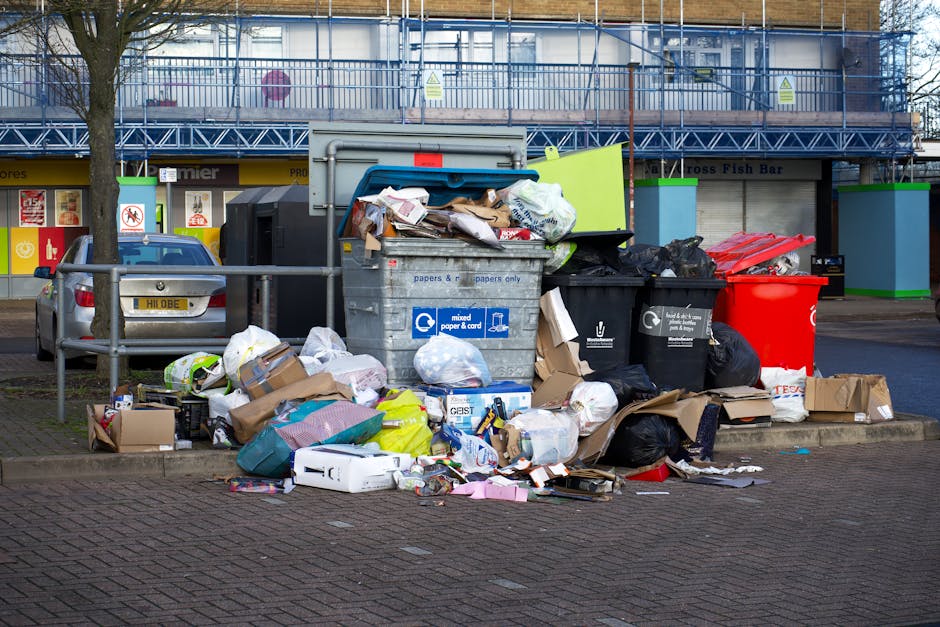
Kingston Council bulky waste rules explained: what you can put out, how collections work, and how to avoid simple mistakes
If you have a sofa by the door, a broken wardrobe in the hallway, or a mattress that has been sitting there for weeks, you are probably trying to work out the same thing everyone else does: what are the Kingston Council bulky waste rules, and how do you actually get rid of the stuff without making life harder? This guide gives you a clear, human explanation of Kingston Council bulky waste rules explained in practical terms, so you can make a sensible choice without trawling through ten different pages and still feeling unsure.
Bulky waste sounds straightforward, but in real life it often catches people out. One item is fine, two are not. Some things can be collected, others need separate handling. A lot depends on size, material, access, and whether the item is safe to move. Let's face it, it is rarely the glamorous part of moving house, but it can be one of the most annoying. This article walks through the rules, the usual expectations, the common errors, and the options people in Kingston tend to consider when they need a fast, tidy solution.
Along the way, you will also see when a specialist clearance service may make more sense than trying to wrestle a heavy cabinet down the stairs yourself. If you are dealing with furniture, a garage full of odds and ends, or a bigger home clearance job, you may also find it useful to look at furniture clearance, house clearance, or broader waste removal support later on.
Table of Contents
- Why Kingston Council bulky waste rules explained matters
- How Kingston Council bulky waste rules explained works
- Key benefits and practical advantages
- Who this is for and when it makes sense
- Step-by-step guidance
- Expert tips for better results
- Common mistakes to avoid
- Tools, resources and recommendations
- Law, compliance, standards, or best practice
- Options, methods, or comparison table
- Case study or real-world example
- Practical checklist
- Conclusion
- Frequently asked questions
Why Kingston Council bulky waste rules explained matters
Bulky waste rules matter because large household items do not behave like ordinary bin waste. A chair, wardrobe, bed frame, or old chest freezer takes up space quickly, can block access, and may create a safety issue if left in a stairwell or communal area. In a flat, that can become a neighbour problem almost overnight. In a house, it can turn the front room into a storage unit nobody asked for.
For residents in Kingston, understanding the rules helps you avoid wasted time, avoid putting items out on the wrong day, and reduce the risk of being told a collection cannot be completed. It also helps you decide whether council collection is the right route or whether a private clearance is more practical. That decision matters more than people think. If you only have one small item, council collection may suit you. If you have multiple heavy items, mixed rubbish, or awkward access, the easier path may be a dedicated clearance service such as home clearance or, for more specific jobs, garage clearance.
Expert summary: the smartest bulky waste approach is usually the one that fits the type of item, the amount of lifting involved, and how quickly you need the space back. If you get those three things right, the rest is usually manageable.
How Kingston Council bulky waste rules explained works
Although the exact booking method and collection criteria can change over time, the general structure of bulky waste services in local councils is usually similar. You identify the items, check what can and cannot be collected, book a slot, and place the waste out in the required way. That sounds easy enough. The details, however, are where most people get caught out.
In practice, bulky waste rules usually cover several things:
- what counts as bulky waste rather than normal household rubbish
- how many items are allowed per booking or collection
- whether certain items are refused for safety or treatment reasons
- how the waste must be presented for pickup
- what happens if items are blocked, broken apart, or contaminated
- whether payment, booking lead times, or confirmation is required
One useful way to think about it is this: bulky waste collections are designed for items too large for the usual bin service, but not every large item is automatically acceptable. A mattress might be fine. A fridge may need extra care. Builders waste is a different category altogether and may not belong in a bulky waste collection at all. For renovation debris, it is often better to look at builders waste clearance rather than assuming the council will take it as general bulky waste.
There is also the question of access. If the collection crew cannot safely reach the item, or if it needs to be dismantled first, the job may not proceed. That is why it helps to measure large items before booking, check hallway widths, and think about staircases, lifts, and parking. A bit dull? Sure. Also very useful.
Key benefits and practical advantages
Following the bulky waste rules properly is not just about compliance. It can save time, reduce stress, and make the clear-out feel less chaotic. There is a genuine advantage to doing this cleanly from the start.
1. You avoid failed collections
If you know what the council expects, you are less likely to put items out that do not qualify. Failed collections are frustrating because the space is still cluttered and you may still need a second plan. A quick check up front prevents that slow, sinking feeling when you see the item untouched the next morning.
2. You keep shared spaces clearer and safer
In blocks of flats, bulky waste left in communal areas can become a trip hazard or block access. That is especially relevant in smaller Kingston properties where hallways can be tight. Clear guidance keeps things moving and keeps neighbours happier, which is never a bad thing.
3. You can compare council and private options properly
Once you understand the rules, you can compare the council route with a private clearance provider on real facts rather than guesswork. For example, if you need a full property cleared rather than a single item removed, a service such as flat clearance or loft clearance might save more time than a piecemeal approach.
4. You reduce handling risks
Heavy furniture and awkward appliances cause most of the awkward lifting problems. If a job looks like a two-person lift and you only have one person at home, that is already a warning sign. Common sense, really, but easy to ignore when you want the thing gone by lunchtime.
5. You get a cleaner handover
If you are moving out, selling, letting, or simply reclaiming the space, a proper bulky waste plan helps you hand the property over in better condition. That can make a real difference, especially when deadlines are tight and every room seems to be hiding one more thing.
Who this is for and when it makes sense
This guidance is useful for anyone in Kingston who has one or more large items to remove and wants to know whether council collection is the right path. Typical situations include:
- people clearing out after a move
- families replacing furniture
- landlords between tenancies
- tenants who need to leave a property tidy
- homeowners dealing with old shed contents, mattresses, or storage overflow
- small offices getting rid of old furniture or desks
If you are dealing with office items, the rules and practicalities can be a bit different from domestic rubbish. In those cases, a dedicated office clearance or business waste removal service is often the more realistic option.
It makes sense to use council bulky waste when you have a limited number of acceptable items, you are not in a huge rush, and the access conditions are straightforward. It makes less sense when the waste is mixed, heavy, or part of a larger clearance job. If your issue is not just one sofa but a whole room of old furniture, boxes, and odd bits, that is usually the point where private collection starts to look more efficient.
Step-by-step guidance
Here is a practical way to handle bulky waste without overcomplicating it.
- List every item you want removed. Be specific. "Wardrobe" is better than "big wooden thing" and will help you judge what can be collected.
- Separate bulky items from ordinary rubbish. Do not mix food waste, loose rubbish, or renovation debris in with large furniture unless the service clearly allows it.
- Check condition and safety. If an item is sharp, broken, wet, contaminated, or too heavy to move safely, that changes the plan.
- Measure anything awkward. You do not want to discover at the last minute that the item will not fit through the stairwell.
- Decide whether the council route is enough. If the job is bigger than expected, compare it with a specialist clearance option.
- Book or arrange the collection. Follow the required process carefully, including any limits on what can be placed out.
- Prepare the items properly. Put them in the right location and at the right time, and make sure access is clear.
- Keep the pathway open. A neat front path or landing can make all the difference on collection day.
That last point sounds minor, but it matters. A blocked doorway, parked car, or locked gate can delay everything. A little planning goes a long way, honestly.
Expert tips for better results
After dealing with enough clearances, one pattern stands out: the smoothest jobs are the ones that are prepared before anyone arrives.
Tip 1: Sort by material, not just by size. Wood, fabric, metal, and electrical items may be treated differently. A broken table and an old television both look like clutter, but they are not always handled the same way.
Tip 2: Dismantle only when it helps. Taking legs off a table or removing a headboard can make moving easier. But do not spend an hour unscrewing everything if the item could have been carried out safely as one piece.
Tip 3: Keep one clear decision-maker. In family homes, the collection job can get delayed because three people are all saying "maybe keep that." If possible, decide before collection day. Saves a headache.
Tip 4: Think about the next space. If you are removing bulky waste because you want to reorganise a loft, garage, or spare room, it may be worth planning the wider clearance at the same time. A single trip for a cluttered garage clearance or loft clearance can be more efficient than multiple smaller removals.
Tip 5: Check recycling intentions. Where possible, look for ways to keep reusable furniture in circulation and keep recyclable material out of landfill. If environmental impact matters to you, the company's recycling and sustainability approach is worth understanding before you book.
Common mistakes to avoid
A lot of bulky waste problems come down to simple, avoidable errors. The good news is that most of them are easy to sidestep once you know what to look for.
- Assuming every large item is accepted. It is tempting to think, "It's big, so it must count." Not always.
- Leaving the booking too late. If you are moving out next week and the collection window is not immediate, you may need a backup plan.
- Mixing bulky waste with general rubbish. This is one of the easiest ways to cause a refusal.
- Underestimating access issues. Narrow stairs, locked entrances, and parking restrictions can all get in the way.
- Forgetting about disassembly. Sometimes a simple bed frame needs to be broken down first, or the item just will not fit.
- Not checking whether the item is reusable or special waste. Some items are better handled as furniture disposal rather than general waste.
One small but surprisingly common mistake is leaving batteries, personal papers, or loose contents inside items like filing cabinets or bedside tables. People forget. Fair enough. But it can create unnecessary sorting on the day.
Tools, resources and recommendations
You do not need a toolbox full of specialist kit for bulky waste, but a few basics make life easier.
- Tape measure: for checking item dimensions and access points
- Gloves: for grip and protection when moving rough or dirty items
- Basic screwdriver or hex keys: useful if furniture needs minor dismantling
- Labels or notes: helpful if several items are going in different directions
- Blanket or protector sheets: useful for protecting walls, floors, and shared hallways
From a planning perspective, a few website pages can help you compare services and understand what kind of clearance you actually need. If the job is domestic, home clearance and house clearance are worth reviewing. If it is one specific item, furniture-focused options like furniture disposal may be more appropriate. For larger mixed loads, waste removal gives you a broader picture.
If you are still weighing up costs, the pricing and quotes page can help you understand how a service may be structured. And if you want to know more about the business itself before booking anything, the about us page is a good place to start.
Law, compliance, standards, or best practice
When bulky waste is involved, the main compliance point is simple: waste should be handled safely, legally, and by the right route. In the UK, that usually means making sure waste is not dumped, fly-tipped, or handed to someone who cannot handle it properly. That applies whether the item is a worn-out sofa or a pile of mixed household clutter.
For residents, the practical best practice is to be honest about what you have, follow the collection rules closely, and keep personal access routes clear. For businesses, there is an added responsibility to arrange waste handling properly and keep records where needed. A commercial job may also need more careful treatment for data-bearing items or office furniture. If that sounds like your situation, a service such as office clearance or business waste removal may be the more suitable route than a domestic-style bulky collection.
Health and safety matters too. Heavy lifting, sharp edges, damp items, and blocked exits are not things to shrug off. A professional provider should have sensible controls in place, and it is reasonable to review their health and safety policy and insurance and safety information before going ahead. That is just good judgement, really.
For peace of mind on the admin side, useful pages such as terms and conditions, privacy policy, and payment and security can tell you how the service handles booking and customer information. Small detail, but worth checking.
Options, methods, or comparison table
Most people in Kingston end up choosing between three broad options: council bulky waste collection, private waste removal, or a fuller clearance service. Here is a practical comparison.
| Option | Best for | Strengths | Limitations |
|---|---|---|---|
| Council bulky waste collection | One-off large household items | Simple for straightforward loads, often suitable for limited items | May have item limits, access rules, and longer waits |
| Private waste removal | Mixed bulky waste or time-sensitive jobs | Flexible timing, often faster, can suit awkward loads | Needs a reliable provider and clear pricing |
| Full clearance service | Homes, flats, garages, lofts, or offices with multiple items | Removes more in one visit, less lifting for you, good for bigger jobs | Not always necessary for a single item |
The right choice depends on volume, urgency, access, and how much sorting you want to do yourself. If you just need one broken armchair gone, the council route may be fine. If you have a full room to empty, a more comprehensive service is usually less painful. And yes, "less painful" is the technical term we all understand.
Case study or real-world example
A fairly typical Kingston scenario goes like this. A family has been clearing a spare room after years of using it as "temporary storage," which is the most permanent kind of storage there is. They find an old bed frame, a heavy wardrobe, a damaged desk, two office chairs, and a bag of random bits that used to live in drawers. At first, they assume it all counts as bulky waste. Then they realise the mix of items is more complicated than expected.
They have two choices. They can split the waste, book multiple collections, and spend time measuring and moving items into the right position. Or they can treat it as a small home clearance and deal with the lot in one organised visit. In that situation, a service like home clearance is often the smoother choice, especially if the room is upstairs and access is tight. If the property is a flat with shared access and a narrow staircase, flat clearance may fit even better.
The family in this example does not just save time. They also avoid the repeated lifting, the "we'll do it next weekend" cycle, and the awkward moment when the hallway becomes a halfway house for old furniture. By late afternoon, the room looks bigger, brighter, and oddly quiet. That silence after a long clear-out? Very satisfying.
Practical checklist
Use this checklist before arranging bulky waste removal in Kingston:
- Have you listed every item clearly?
- Have you separated bulky items from ordinary rubbish?
- Do you know whether any item needs dismantling?
- Have you measured the largest or heaviest pieces?
- Is the access route clear from the item to the exit?
- Do you know whether the council route is suitable for this load?
- Would furniture-focused or full-property clearance be easier?
- Have you checked whether the items are reusable, recyclable, or special waste?
- Have you removed personal contents from cabinets, drawers, or storage furniture?
- Have you confirmed the timing you need?
If you can tick most of those off, you are in a strong position. If not, pause for a moment and reassess. A five-minute rethink can save a whole day of fuss.
Conclusion
Kingston Council bulky waste rules are really about making sure large items are removed safely, fairly, and in a way that works for both residents and the collection service. Once you understand what counts as bulky waste, what the access expectations are, and where council collection ends and specialist clearance begins, the whole process becomes much less stressful.
The best approach is usually the simplest one that genuinely fits the job. One item? Keep it simple. Several items, awkward access, or a full room to clear? Step up to a more complete solution. Either way, planning a little in advance makes the day easier and the result tidier. And that, in the end, is what most people want: one less mess, one more space you can actually use.
If you are ready to move from "I should deal with this" to "that is finally gone," it may be worth comparing your options and choosing the route that saves time, lifting, and repeat effort.
Get a free quote today and see how much you can save.
Frequently Asked Questions
What counts as bulky waste in Kingston?
Bulky waste usually means large household items that do not fit in normal bins, such as sofas, mattresses, wardrobes, tables, and similar oversized items. The exact list can vary, so it is worth checking what the service accepts before you book.
Can I put a mattress out for bulky waste collection?
In many cases, yes, but mattresses may have specific handling rules because they are awkward to move and may be treated differently from furniture. It is best to confirm acceptance and preparation instructions first.
Will the council take a broken wardrobe or bed frame?
Often yes, if it is within the collection rules and safe to handle. If the item needs to be dismantled or contains mixed materials, that can affect whether it is accepted.
How many items can I book at once?
That depends on the service rules in force at the time. Councils often have limits on item numbers or volume, which is why checking the booking details matters before you plan a full clear-out.
Do I need to move bulky waste to the kerb myself?
Usually the item must be placed where the collection instructions say it should be, and that may mean a front boundary, driveway, or another accessible point. If access is difficult, a private clearance may be easier.
What items are commonly refused?
Items that are unsafe, contaminated, too heavy, or not classed as bulky household waste may be refused. Builders debris, for example, is often better handled separately through builders waste clearance.
Is council bulky waste cheaper than private clearance?
Sometimes, yes, especially for a small number of items. But private clearance can be better value if you need speed, want multiple items removed, or do not want to manage moving and sorting yourself.
What should I do before collection day?
Measure awkward items, clear access routes, remove personal contents, and make sure items are ready in the correct place. A little preparation saves a lot of back-and-forth later.
Can I combine furniture, junk, and garage clutter in one collection?
Not always. Mixed loads can be treated differently depending on the service. If the job includes varied household clutter, a broader home clearance or garage clearance may be more suitable.
What if I live in a flat with narrow stairs?
That can make bulky waste removal trickier, especially for larger furniture. In that case, flat clearance or a tailored waste removal service may be the more practical option.
Should I use a clearance company instead of council collection?
If you have several large items, limited time, or awkward access, a clearance company may be the better choice. If it is just one straightforward item and you are not rushed, council collection may be enough.
How do I know if my items are reusable or recyclable?
Look at the condition and material of each item. Solid furniture, metal frames, and some household goods may be reusable or recyclable, while damaged, contaminated, or mixed-material items may need disposal. A provider with a clear recycling and sustainability approach is useful here.
Where can I check the company's policies before booking?
It is sensible to review the terms and conditions, health and safety policy, insurance and safety information, and payment and security details before confirming any service. That keeps everything clear and avoids surprises.