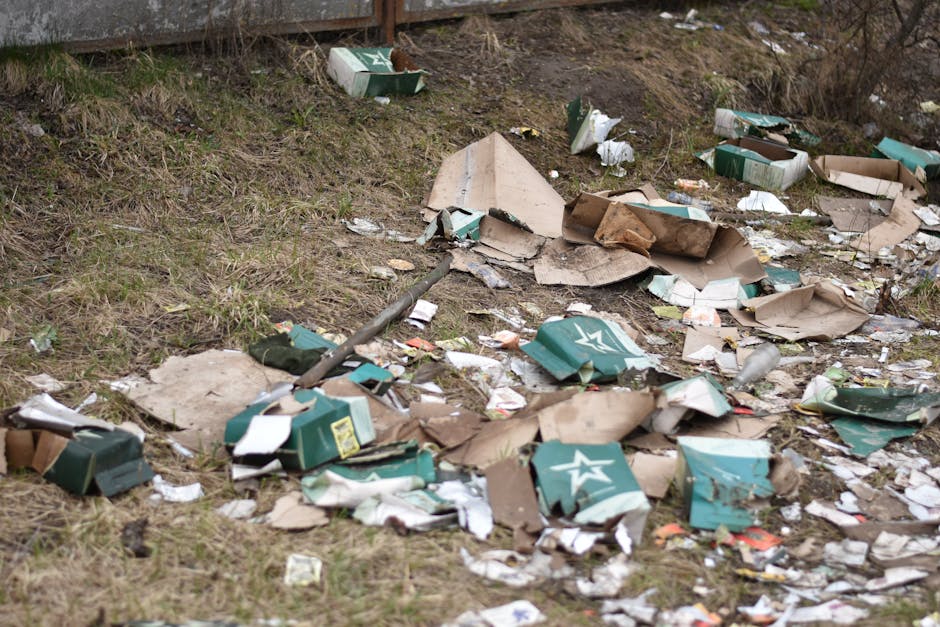
Report fly-tipping on Coombe Lane South, Kingston
If you have spotted dumped waste on Coombe Lane South, you are probably dealing with more than an eyesore. Fly-tipping can block verges, attract pests, create a nasty smell, and make an ordinary walk feel oddly tense. The good news is that there is a sensible way to deal with it. This guide explains how to Report fly-tipping on Coombe Lane South, Kingston, what information helps most, and what to do if the waste looks hazardous or has been left in a dangerous spot.
Truth be told, most people only want two things in this situation: to stay safe and to get the mess dealt with. That is fair enough. Below, you will find a practical step-by-step approach, a checklist, useful local considerations, and a few expert tips that can make your report more effective. If you are also trying to avoid repeat incidents, there are some useful next-step ideas here too.
Table of Contents
- Why reporting fly-tipping on Coombe Lane South matters
- How the reporting process works
- Key benefits and practical advantages
- Who this is for and when it makes sense
- Step-by-step guidance
- Expert tips for better results
- Common mistakes to avoid
- Tools, resources and recommendations
- Law, compliance, standards, or best practice
- Options, methods, or comparison table
- Case study or real-world example
- Practical checklist
- Conclusion
- Frequently asked questions
Why Report fly-tipping on Coombe Lane South, Kingston Matters
Fly-tipping is not just messy rubbish left behind. In a place like Coombe Lane South, where people may be walking, driving, cycling, or passing by with children and pets, dumped waste can quickly become a public nuisance. It can also spread if someone adds more bags, old furniture, builders' waste, or broken household items.
There is a practical reason to report it quickly: the longer waste sits there, the more likely it is to become a larger problem. Rain can soak cardboard and food waste. Sharp edges can become hidden. And if the pile is close to a road, sightlines can be affected. That is the kind of thing nobody notices until there is nearly a mishap.
From a community point of view, reporting also helps identify patterns. If the same stretch keeps getting used for dumping, that tells the local team where attention may be needed. A single report may not solve every issue immediately, but it is often the first proper step toward action.
Expert summary: A good fly-tipping report is specific, calm, and factual. Describe what is there, where it is, whether it looks dangerous, and when you noticed it. That simple structure tends to be much more useful than a long emotional rant. Understandably, you may be annoyed. Still, clear details usually get the best response.
How Report fly-tipping on Coombe Lane South, Kingston Works
The reporting process is usually straightforward, but the exact route can vary depending on who owns the land and how urgent the situation is. In many cases, the key question is whether the waste is on a public highway, verge, footpath, or private land. That distinction matters because it affects who is responsible for clearing it.
If the waste is on public land, a local authority or relevant land manager may handle the report. If it is on private property, the landowner or managing agent often needs to arrange removal. That is why location detail matters so much. "Near Coombe Lane South" is less helpful than "on the roadside verge opposite the junction" or "beside the entrance gate."
Most useful reports include:
- the exact location or nearest landmark
- a short description of the waste
- the approximate size of the pile
- the date and time you noticed it
- any signs of hazard, such as broken glass or leaking liquids
- whether it appears to be a one-off dump or a repeated issue
You do not need to investigate it yourself. In fact, it is better not to. If bags are ripped open, needles are visible, or the waste is smoking or smouldering, keep your distance and treat it as a safety issue first.
For related service information, some readers also like to look at who is behind the Kingston service, especially if they want to understand the wider approach to responsible waste handling and local support.
Key Benefits and Practical Advantages
Reporting fly-tipping promptly gives you a few real advantages, and not just the obvious one of "making the mess go away."
- Faster cleanup: The sooner a report is made, the sooner it can be assessed and dealt with.
- Better safety: Hazardous items can be flagged before someone gets hurt.
- Cleaner streets: Small problems do not get the chance to grow into a bigger eyesore.
- Evidence for patterns: Repeated reports can help show where dumping is happening most often.
- Peace of mind: You have done the responsible thing, which counts for a lot when something ugly has appeared near your home or business.
There is also a less obvious benefit: good reporting helps avoid wasted effort. If a team has to return because the initial report lacked location detail, time is lost. If the waste turns out to be on private land, the right person needs to know. Small details save small headaches. Or big ones, sometimes.
Who This Is For and When It Makes Sense
This guide is for anyone who has seen dumped waste on or around Coombe Lane South and wants to deal with it properly. That might be a resident, a commuter, a nearby business owner, a landlord, a caretaker, or someone simply passing through who notices something wrong.
It makes sense to report fly-tipping when:
- the waste is blocking a pavement, verge, entrance, or access route
- it looks like household rubbish, trade waste, tyres, broken furniture, or bags of mixed debris
- you suspect it may contain sharp or hazardous material
- it is causing a smell, attracting flies, or looks like it may spread
- you have noticed the same spot being used repeatedly
If you are a business nearby, the issue can also be operational. Fly-tipping can affect customers, deliveries, staff morale, and first impressions. Let's face it, nobody wants to step around someone else's sofa at 8:30 on a Monday morning.
And if the waste is the result of a larger clearance problem, it may be worth checking practical options such as clear pricing and quote information before deciding how to handle removal yourself.
Step-by-Step Guidance
If you want to report fly-tipping effectively, keep it simple and methodical. No need to overthink it.
- Make sure it is safe to approach. Stay back if there is broken glass, needles, chemicals, smoke, or anything that looks unstable.
- Note the location. Use the nearest road name, landmark, property boundary, or visible feature. Coombe Lane South can be busy enough that exact positioning matters.
- Describe the waste. Give a plain-English summary: black sacks, upholstered chair, white goods, builders' rubble, household clutter, or mixed rubbish.
- Estimate quantity. A small pile and a van-load are very different. Even a rough estimate helps.
- Record the timing. Say when you first saw it and whether it looks freshly dumped or older.
- Take careful photos if it is safe. Keep distance. You are documenting, not investigating.
- Submit the report through the appropriate local route. If you are not sure whether the land is public or private, give the clearest location details possible.
- Follow up if the situation worsens. If the pile grows, becomes hazardous, or blocks access, update the report rather than assuming the first note was enough.
A small but useful habit: write down your observations before you forget them. A quick note on your phone while the scene is fresh can make the later report much sharper. The light is often different in the evening too, and it can be surprisingly hard to remember whether the bags were right beside a lamppost or a fence post.
What details are most useful?
The most helpful reports usually answer five questions: what, where, when, how much, and how risky. If you can cover those, you are in good shape. You do not need perfect language. Just useful language.
Expert Tips for Better Results
In our experience, the best fly-tipping reports are calm, specific, and free of guesswork. That sounds obvious, but it makes a real difference.
- Use fixed points. "By the third lamppost from the corner" is often better than "somewhere near the hedge."
- Avoid handling anything. Even apparently harmless waste can hide glass, sharps, or contamination.
- Separate fact from assumption. Say "appears to be builders' waste" rather than "definitely from the house next door."
- Report repeat dumping as a pattern. If it keeps happening, mention the history briefly and clearly.
- Keep the tone factual. Strong feelings are understandable, but a tidy report is easier to act on.
Another practical tip: if you are reporting from a phone, make sure the photos show context as well as detail. One close-up of a torn bag is not enough if nobody can tell where it is. A wider shot plus a closer shot is better. Simple, but effective.
You may also want to review a provider's approach to safety before arranging removal or clearance support. Pages such as health and safety guidance and insurance and safety information can give a clearer sense of how professional work should be managed.
Common Mistakes to Avoid
A lot of reports fail for small, avoidable reasons. Nothing dramatic. Just little misses that slow things down.
- Being too vague: "Dumped rubbish on Coombe Lane South" is a start, but it may not be enough to locate the problem accurately.
- Moving the waste: This can create safety risks and may disturb evidence if the dumping is being investigated.
- Using unclear photos: Blurry images, close-ups with no context, or photos taken in poor light can be difficult to use.
- Assuming it is already reported: If you have not personally reported it, do not count on someone else having done so.
- Ignoring repeat incidents: Patterns matter. A one-off dump and a recurring hotspot are not the same thing.
One mistake people often make is trying to "help" by dragging bags into a neater pile. Honestly, that can make things worse. If something turns out to be contaminated or sharp, you have just made extra work and risk for yourself. Not worth it.
Tools, Resources and Recommendations
You do not need fancy equipment to report fly-tipping, but a few simple tools help.
- Phone camera: Use it for quick, safe photos.
- Notes app: Record the date, time, location, and what you saw.
- Landmark awareness: Street signs, railings, kerbs, entrances, and lamp posts all help with location accuracy.
- Protective distance: A common-sense buffer is often the best tool of all.
If you are arranging legitimate clearance work after a report, it helps to understand how responsible operators present themselves. A transparent recycling and sustainability approach is usually a good sign, because fly-tipped waste should never just be dumped somewhere else under a different name. That is not a solution. That is relocation with extra steps.
For administrative reassurance, it can also be sensible to review terms and conditions and privacy details before submitting personal information through a website form. If payment is involved in any related service, the page on payment and security is worth a look too.
Law, Compliance, Standards, or Best Practice
Fly-tipping is not just a nuisance; it can also involve legal and compliance issues. In the UK, waste must be handled and disposed of properly, and irresponsible dumping can lead to enforcement action. Without getting too legalistic, the practical point is simple: waste should go to the right place, be handled safely, and be traceable where appropriate.
If you are a resident, your main concern is usually reporting the problem and avoiding unsafe contact. If you are a landlord, business owner, or contractor, the bar is higher. You may need better record-keeping, better waste transfer arrangements, and a more careful approach to who removes your rubbish. That is especially true in London, where even a small mishandled load can create a visible local issue very quickly.
Best practice usually means:
- using reputable waste handlers
- keeping evidence of disposal and clearance where relevant
- avoiding unlicensed or informal dumping arrangements
- making sure hazardous items are treated separately
- training staff or household members not to leave waste unsecured
There is also a social responsibility angle. A neat street helps everyone, but a recurrent dumping spot can become a magnet for more bad behaviour. One bag left there often becomes three. You know how it goes.
Options, Methods, or Comparison Table
When you discover fly-tipping, you generally have a few practical options. The right one depends on whether the waste is dangerous, who owns the land, and how quickly it needs attention.
| Option | Best for | Pros | Limitations |
|---|---|---|---|
| Report it for official assessment | Public land, roadside waste, unknown origin | Creates a record, may trigger removal, low effort for the reporter | Response times can vary |
| Ask the landowner or managing agent | Private land or managed premises | Direct route to the responsible party | You may need to identify ownership first |
| Arrange professional removal | Clearance needed quickly or in bulk | Fast, structured, safer for large or awkward waste | Costs can vary and should be checked in advance |
| Wait and monitor | Very minor, non-urgent situations | Useful if more information is needed | Not suitable if the waste is hazardous or growing |
For many people, reporting is the right first move. If the issue turns into a broader clearance requirement, reviewing pricing and quote details can help you decide whether to keep chasing a free public cleanup route or to organise removal more directly.
Case Study or Real-World Example
Imagine a resident walking along Coombe Lane South on an overcast weekday morning. It is quiet enough to hear traffic on the nearby road, but not quiet enough to ignore a stack of black sacks and a broken chair left at the roadside verge. At first glance, it looks like a small problem. Then you notice torn packaging, a leaking bottle, and a couple of loose items scattered toward the kerb.
The resident does not move anything. Instead, they step back, take two photos from a safe distance, note the nearest house number and lamp post, and write down the time. They also mention that the waste was not there the previous evening. The report is brief, factual, and easy to understand.
That kind of report is useful because it gives a clear picture: the location is specific, the waste type is described, and the time frame is narrow. A cleaner or inspector can work with that. Compare it with "loads of rubbish somewhere by Coombe Lane South," and you can see why a better report stands a better chance of helping.
Sometimes, if the dumping is linked to a larger decluttering job, the next sensible step is to seek proper removal support rather than letting the problem sit. For general service background, the contact page is a useful place to start when you need to ask a practical question rather than make assumptions.
Practical Checklist
Before you submit your report, run through this quick checklist. It saves time and helps you avoid the small mistakes that cause delays.
- Have I checked that it is safe to get close enough to observe?
- Have I noted the exact location on or near Coombe Lane South?
- Have I described the waste clearly and simply?
- Have I estimated the quantity or size of the pile?
- Have I recorded when I saw it and whether it appears fresh?
- Have I taken safe photos with enough context?
- Have I avoided moving or touching the waste?
- Have I mentioned any hazard, smell, spill, or obstruction?
- Have I identified whether it may be public or private land, if obvious?
- Have I kept my notes factual rather than speculative?
If you can tick most of those off, you are in a strong position. And if you cannot, that is fine too. Just do the best job you can with the information you have.
Conclusion
Reporting fly-tipping on Coombe Lane South is one of those unglamorous but genuinely useful things that keeps a local area safer, tidier, and easier to use. A good report does not need to be dramatic. It needs to be clear, calm, and specific.
Remember the core sequence: keep your distance, note the location, describe the waste, record the time, and pass on the facts. That alone can make the difference between a vague complaint and a report that leads somewhere useful. And if the issue turns out to be part of a bigger clearance or compliance problem, you will already be thinking in the right way.
Get a free quote today and see how much you can save.
Sometimes the most helpful thing you can do is simply notice, report, and leave the rest to the right people. Small action, big difference. Really, that is how local places stay livable.
Frequently Asked Questions
How do I report fly-tipping on Coombe Lane South, Kingston?
Start by noting the exact location, the type of waste, and whether it looks hazardous. Then submit the report through the relevant local route or landowner contact, depending on where the waste is sitting. Clear, factual details help the most.
Should I move the rubbish before reporting it?
No, not unless you are formally authorised and it is safe to do so. Moving dumped waste can expose you to broken glass, sharps, chemical residue, or hidden contamination. It can also make the situation harder to assess.
What details make a fly-tipping report stronger?
The best reports include the exact spot, a description of the waste, the approximate size, the time you saw it, and any obvious risks such as leaks or sharp items. Photos help if they are taken safely and show context.
What if the waste is on private land?
Private land is usually the responsibility of the owner, landlord, or managing agent. If you are not sure who that is, describe the location as clearly as possible so the right party can be contacted.
Is fly-tipping always an emergency?
Not always, but it can become urgent if the waste blocks access, includes hazardous materials, or is near traffic. If there is immediate danger, treat it as a safety issue first rather than a normal cleanup job.
Can I report repeat dumping at the same spot?
Yes, and you should. Repeated dumping is useful information because it can show a pattern. Mention if the same place has been used before, even if you are not sure how often it happens.
How quickly should fly-tipping be removed?
That depends on the location, size, and hazard level. Small non-hazardous waste may take time to be assessed, while dangerous or obstructive material should be dealt with sooner. Timelines can vary, so accuracy matters.
What should I do if I find needles or chemical containers?
Keep well away and do not touch anything. Make the report as soon as possible, and highlight the hazard clearly. Those items require caution because they can present a direct safety risk.
Can I get help if I need waste cleared after reporting it?
Yes. If the waste is on your property or you need a faster solution, a professional clearance service may be appropriate. It is sensible to check service standards, safety, and pricing before agreeing to anything.
Why does fly-tipping keep happening in the same place?
Common reasons include low visibility, easy vehicle access, poor lighting, and a belief that the area is not monitored. Repeated reports help highlight hotspots so the problem is harder to ignore.
What if I am not sure whether the waste is fly-tipping or just a missed collection?
If it looks like household or trade waste dumped in the wrong place, report it as fly-tipping. If it appears to be a collection issue, note that in your description. Either way, the location and the condition of the waste are what matter most.
Where can I find more information about the company's approach to safety and responsibility?
It can be helpful to review pages such as the health and safety policy, recycling and sustainability information, and complaints procedure if you want a clearer picture of how service standards and accountability are handled.